
Thirty interviews and a journey map showed us where the real friction was
I interviewed 30 people across Inter IKEA and related companies, from product developers to customer-facing employees. Being new to the internal organisation, these conversations helped me understand both the pain points and how different departments connected. I mapped the findings into a user journey to visualise the flow of spare parts and data and identify exactly where things broke down.

Narrowing scope to one upstream decision changed the whole approach
The journey map showed the problem was too broad for our small team to address at once. We decided to focus on the moment that mattered most: when engineers decide which components become spare parts. Our hypothesis was that solving this upstream would naturally improve everything that came after.
This was also when we decided to explore AI as the core of the solution, using historical performance data to inform recommendations rather than relying on individual judgment.
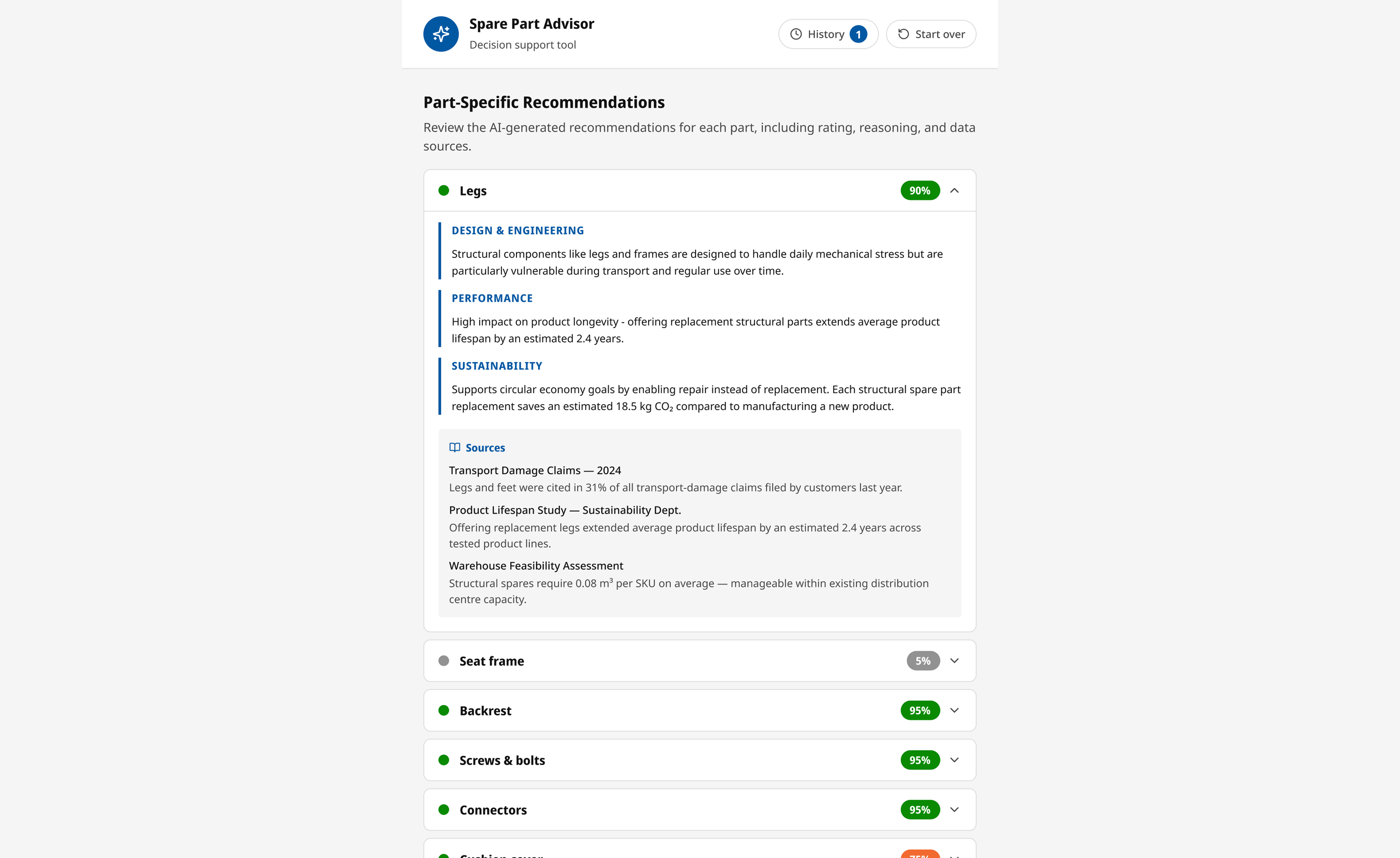
An A/B test between chat and form gave us a clear answer on adoption
I used Figma AI to build a prototype of the decision-making tool. I was unsure about the best way for engineers to input information, so I designed a test comparing two approaches: a conversational chat interface and a traditional structured form. Results were mixed on which users preferred, but they were consistent on one thing: the form would get broader buy-in from colleagues. We moved forward with the form.
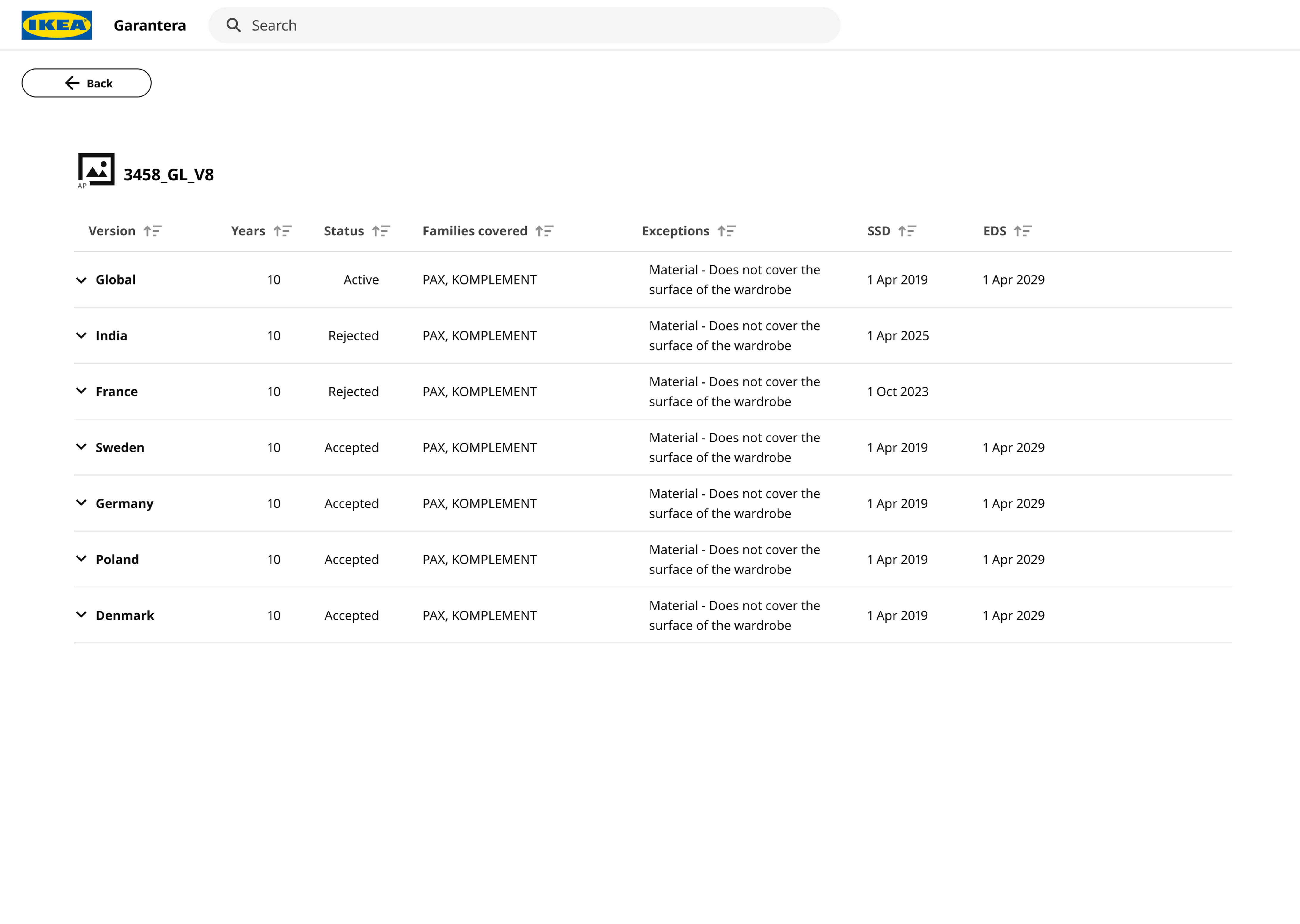
For guarantees, iterative rounds of testing resolved the visibility problem
While my teammates worked on the guarantees problem, I stepped in to lead the prototyping once they had their requirements. I facilitated workshops to gather what we needed, then built a prototype using IKEA's Skapa design system. We tested and refined through multiple rounds with stakeholders and users, and the final feedback was unanimous: the design addressed the core visibility issues we set out to solve.
Both prototypes are now the foundation for what gets built next
My time with IKEA ended before the full rollout, but both workstreams are continuing. A data scientist is building the spare parts recommendation model based on the experience I designed. The guarantees prototype was taken over by other Inter IKEA teams whose platforms align with the scope, and they are using it as the blueprint for the final product.